
There's a pattern we've noticed across WA school websites, and it usually becomes visible on about the third click.
You land on a school's homepage, professional photos, a strong header, programmes front and centre. You're looking for the canteen menu, or the term dates, or whether the excursion form is due today. You click around for a while and eventually you give up and call the office or hit up the Facebook group.
The website design might be fine, but the problem is usually simpler: the site was built with the wrong audience in mind. The families who need to use it every day, strangely, weren't really part of the brief.
The website is usually built for the wrong moment
When a school plans a website, most of the conversation is about prospective families. How do we present our programmes? How do we show our culture? What do we want parents to feel when they land on the homepage? How can we show our values?
These are legitimate questions, but they're enrolment questions and they tend to crowd out a different set of questions entirely: What do our current families actually look for? What makes them call the front office? What information do they search for, fail to find, and eventually have to email someone about?
Schools often decide they need thirty pages before they've asked what those pages are supposed to do. The page count gets agreed on before anyone has clarified what the site should actually achieve.
In November 2025, NSW Education retired its dedicated school parent app and directed families back to school websites, rebuilt from the ground up, they said. It's worth noting when a system that size makes that call. The website is where families go, and it has to be built for that.
We'd put it slightly differently: schools decide what to say before asking who they're saying it to.
Navigation that mirrors the school, not the parent
A lot of school website navigation is organised the way the school is organised internally, by department, leadership structure and the things that matter to staff. Families are looking for something more direct: is my child's calendar up to date, where do I find the newsletter, how do I contact the Year 7 coordinator without hunting through a staff directory.
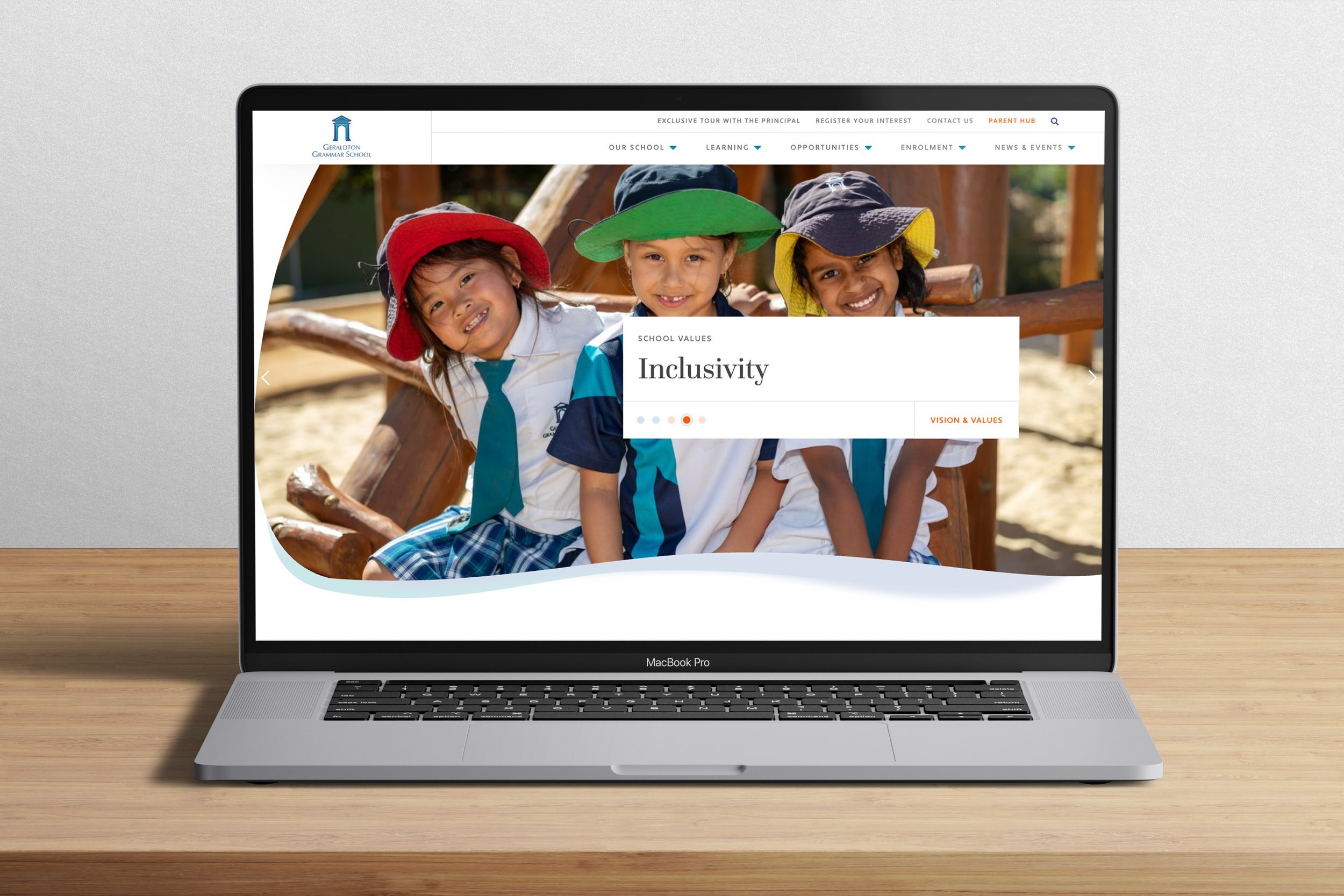
When we rebuilt Geraldton Grammar's website, the brief was explicit about this. The goal, stated plainly, was for parents to find term dates, events, and canteen updates without needing the arduous task of trawling through the Facebook group or calling the office.
The site we built has dual navigation: one path for current families, one for prospective. Enrolled parents aren't scrolling past admissions information to find what they need. Five years on, that school is still running on the same platform, which we think says something about whether it was built for actual use or just for launch day.
Court Grammar School had a version of the same problem. Getting to a single, manageable site fixed the parent experience and changed how the team thought about the website as a daily tool.
The perfection problem
There's a third pattern worth naming, because it costs schools more than they realise.
A website that takes eight months to launch because a working group is still debating the hero image means that school's community has been on an unreliable or outdated site for eight months. The discussions feel important in the room, but the family trying to find out if the P&C meeting has moved doesn't care whether the hero image shows more bushland setting or facilities.
While there’s always a case for care and getting things right, there's a version of perfectionism that happens on the things that don’t matter, taking time away from delivering a resource that the community truly needs.
The questions that tell you if it's working
62% of school website traffic comes from mobile. That number tells you something about where parents actually are when they need something from the school. They're in the car park, they're at work, they’re quickly making breakfast for kids who can’t sit still. They opened their phone because they completely blanked about whether or not there’s a PFD this Friday.
A useful post-launch question, and one schools rarely ask explicitly: are parents calling the front office more or less than they were before the site launched? If the answer is more, the site isn't doing its job.
Other versions of the same question: Are staff publishing updates independently, or is everything still going through one person? Are enrolled families finding the newsletter section, or are they waiting for it to be emailed? When something changes, does the site reflect it quickly enough to be the source of truth?
These aren't complicated to measure, they're just not the metrics that come up in most post-launch conversations, which tend to focus on what the site looks like rather than what it's doing.
It takes longer than launch to get this right
A website that works for a school community isn't usually finished on launch day. Geraldton Grammar has been refining theirs for five years. Court Grammar's site is generating over 40,000 monthly search impressions, but what matters more to the school day-to-day is that staff are publishing without technical help.
The sites that hold up tend to have been built around how the team works. The two audiences, enrolled families and prospective ones, usually got treated as genuinely different problems rather than variations of the same page. And someone stayed close after launch, because the things real users struggle with only become visible once the site is live.
Most of that comes from asking different questions at the start, before anyone starts planning the site menu.
If you're planning your school website, take a look at our Free School Website Planning Guide for 2026.
View the School Website Planning Guide School sector page Geraldton Grammar case study Court Grammar case study